

The rare journey
The rare condition journey
The rare condition journey typically entails several aspects:
- Pre-diagnosis
- Diagnosis
- condition progression or manifestation (aka ‘Living with ‘ – this may include health crises, the impact on identity and life choices, managing symptoms such as impaired mobility etc , pain or fatigue; impact on family planning choices)
- Decline
- End of life – and/or bereavement for parents and carers
From our work with rare groups, charities and organisations to date, and requests for support or access to our services, we know there is a need for service provision at all stages of the rare journey.

Coming to terms with my rare condition with Glenn Stafford
The emotional and psychological impact of rare conditions
It is clear that the mental health and wellbeing needs of the rare community are complex and varied, but there are common themes and experiences. The diagnosis of, and challenges of living with, a rare condition can have profound implications for personal identity, life choices, resources, family dynamics and future wellbeing. Many of these are linked to having to tolerate a high degree of uncertainty, change and loss over time.
Common challenges include:
-
- Lengthy diagnostic odyssey
- Uncertain prognosis and treatment pathways
- Low condition awareness amongst healthcare professionals
- The emotional impact of being the ‘patient expert’
- The impact on family life, choices and relationship dynamics
- Inter-acting emotional and physical symptoms
- The impact on the sense of self and identity
- Unpleasant – and ongoing – tests and treatments
- Fears about the future, or making future plans
- The psychological impact of genetic inheritance
It is not unusual for some people to have been told at some point that their symptoms are ‘all in their head’, and for trust in health care professionals (including counsellors) to be correspondingly low.
The high logistical burden of a condition, and mobility or caring concerns, can also inhibit access to professional emotional support. The reassurance of being able to contact a counsellor with awareness of these aspects, and the ability to be flexible can make all the difference in having confidence to reach out for support at the point of felt need.
Managing uncertainty with a rare condition
Living with uncertainty
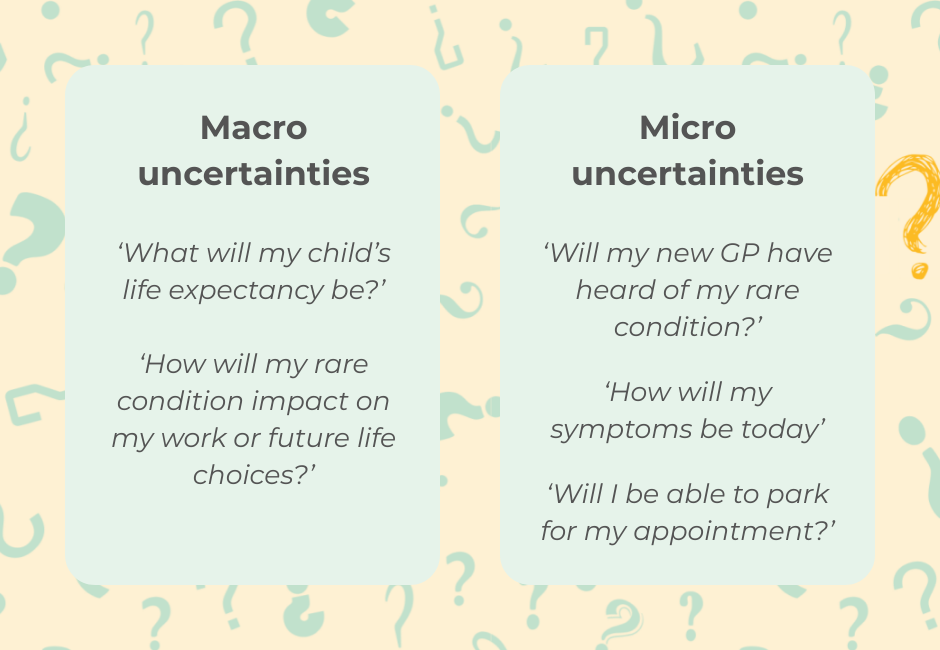
Life with a rare condition involves living with, and managing, a range of macro and micro uncertainties, depending on the rare condition and its impact.
Mitigating ‘avoidable’ uncertainties, such as around the timing and communication of test results, good care coordination, clear information and sign-posting by healthcare professionals have a clear role to play in supporting mental wellbeing.
The impact of living with a rare condition on mental health
In 2018 the Rare condition UK report, ‘Living with a Rare Condition: The Effect on Mental Health’ demonstrated that rare conditions have a significant impact on mental wellbeing.
Of the Rare Disease UK report’s 1,800 respondents:
93% felt stressed
88% emotionally exhausted
70% at breaking point.
36% of patients who responded, and 19% of carers had suicidal thoughts.
Since this report was published the rare community has lived through the Covid-19 pandemic, increased pressure on the NHS and the cost of living crisis.
For a long time the ‘poor relation’ to physical health, the importance of supporting mental health and wellbeing is now finally becoming recognised as an integral aspect of living with a rare condition.
Living with a rare condition is psychologically and emotionally demanding. It impacts not just individuals, but families, relationships, finances, work-life and future choices. It frequently involves low mood, anxiety, emotional exhaustion, and may also at times lead to suicidal thoughts or intention.